
6 alloys
High-Pressure Die Casting
High-speed injection into steel dies for thin-wall, high-volume parts with excellent surface finish.
High-Pressure Die Casting — complete guide
High-pressure die casting (HPDC) is the fastest way to make large quantities of thin-walled, detailed metal parts with an excellent surface finish. Molten metal is injected into a hardened steel die at high speed and held under high pressure while it solidifies — a complete cycle can take well under a minute. At Conex Casting Foundry we use high-pressure die casting for connector bodies, switchgear parts, line hardware and enclosures in brass and aluminum, and we machine and inspect the parts in-house.
This guide explains how high-pressure die casting works, the difference between hot- and cold-chamber machines, which alloys and parts suit it, what accuracy and finish to expect, its limitations, and how it compares with gravity and low-pressure die casting.
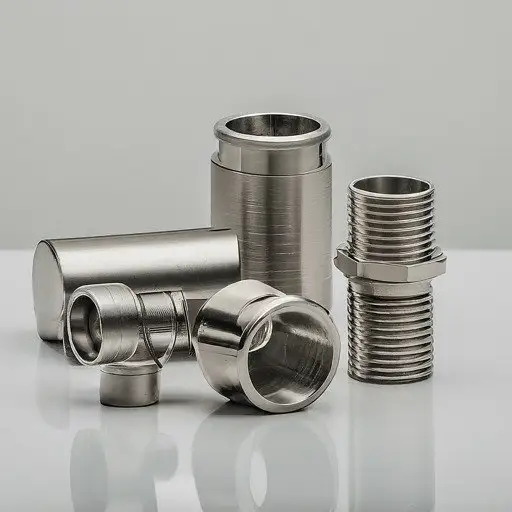
What is high-pressure die casting?
High-pressure die casting — often simply called die casting or pressure die casting — forces molten metal into a closed steel die through a narrow gate at high velocity. The metal fills the cavity in a fraction of a second, and then the machine applies intensified pressure, commonly several hundred bar and up to around 1,000 bar or more on large machines, while the metal solidifies. The die then opens, ejector pins push the casting out, and the cycle repeats.
The speed and pressure are what make the process unique. Metal reaches every corner of the die before it can freeze, so walls of 1–2.5 mm and fine details such as lettering, ribs and bosses can be cast directly. The hardened die gives an excellent, repeatable surface. And because cycle times are short, very large quantities can be made economically.
Copper-alloy die castings are covered by ASTM B176; in EN 1982, pressure die cast copper alloys carry the suffix -GP (for example CC754S-GP).
Hot-chamber and cold-chamber machines
Hot chamber
The injection mechanism sits in the molten metal. It is very fast, but only suits low-melting alloys that do not attack the steel — mainly zinc (Zamak) and some magnesium alloys.
Cold chamber
Metal is ladled from a separate furnace into a shot sleeve, and a plunger drives it into the die. This is the method for aluminum and brass, whose temperature would destroy a submerged injection system. All copper-alloy die casting uses cold-chamber machines.
How high-pressure die casting works

- Die closing and locking. The fixed and moving halves of the die close and are held by the machine's locking force, which must exceed the force of the metal pressure on the projected area of the casting.
- Ladling. A measured dose of molten metal is ladled into the shot sleeve.
- Slow shot. The plunger advances slowly to push air out of the sleeve and bring the metal to the gate without folding it.
- Fast shot. The plunger accelerates and fills the cavity in milliseconds.
- Intensification. Pressure is raised to compact the metal as it solidifies and reduce shrinkage.
- Cooling. The water- or oil-cooled die extracts heat quickly; the casting solidifies within seconds.
- Ejection and trimming. The die opens, the casting is ejected, and the runner, overflows and flash are trimmed in a press or by hand.
- Machining and finishing. Threads, bores and sealing faces are machined; parts may be plated or painted.
Die design: gates, overflows, vents and cooling
A pressure die is a complex tool, and most of the quality of a die casting is designed into it before the first shot. The key elements are:
- Runner and gate. The runner carries metal from the shot sleeve to the cavity; the gate — a thin slot where metal enters the part — controls the speed and direction of filling. Gate size and position decide where the metal goes first and where the last air is pushed.
- Overflows. Small pockets at the far ends of the cavity collect the first, coldest metal and the air and lubricant it pushes ahead, so they end up outside the part. They are trimmed off afterwards.
- Vents. Thin channels at the parting line let air escape as the cavity fills; on critical parts a vacuum system can draw air out before the shot.
- Cooling channels. Water or oil circuits inside the die remove heat at a controlled rate, keeping the die in its working temperature range and the cycle time short.
- Slides and core pins. Moving sections form holes and undercuts and are withdrawn before the die opens.
- Ejector pins. Push the casting out of the moving half; their positions are chosen away from cosmetic faces.
Today die designs are checked with filling and solidification simulation before steel is cut, reducing the number of trial runs needed.
Machine size and locking force
Die casting machines are rated by their locking (clamping) force — the force that holds the die halves closed against the metal pressure. The required force depends on the projected area of the casting and runners multiplied by the metal pressure, plus a safety margin. A small brass connector may need a machine of modest size, while a large aluminum housing needs a much larger one. Choosing the right machine avoids flash at the parting line and protects the die.
Alloys we pressure die cast
| Alloy | Designations | Typical parts |
|---|---|---|
| Die-casting brass | CC754S (CuZn39Pb1Al), C85800 type | Connector bodies, terminals, fittings, small hardware |
| Silicon brass | C87850 type | Lead-free fittings and electrical parts |
| Aluminum alloys | A380 (ADC10), ADC12, LM24, A413 (LM6) | Enclosures, housings, switchgear and motor parts |
Brass is the most demanding alloy to die cast because of its pouring temperature, which shortens die life; parts are therefore usually small and the alloy is chosen for good die-casting behavior. Bronze grades with high tin or lead are not normally pressure die cast. See the alloy library for full grade data.
Accuracy, finish and size
| Characteristic | Typical HPDC value |
|---|---|
| Dimensional tolerance (ISO 8062-3) | DCTG 5–7 |
| Example: a 50 mm dimension | about ±0.15 to ±0.3 mm as cast |
| Surface roughness | Ra 0.8–3.2 µm |
| Minimum wall | about 1–1.5 mm (aluminum), 1.5–2.5 mm (brass) |
| Draft | 0.5–1° external, 1–2° internal |
| Cast holes | Possible down to small diameters with core pins |
| Typical brass part weight | a few grams to about 1–2 kg |
Many features that would need machining in sand or gravity castings — holes, slots, lettering, fine ribs — can be cast to size in high-pressure die casting, reducing secondary operations.
Limitations to understand
High-pressure die casting is not suitable for every part, and a responsible foundry tells you so. Its main limitations are:
- Entrapped gas porosity. Rapid, turbulent filling traps air and die-lubricant gases in the metal. Most of it is fine and harmless, but it means die castings are usually not heat treated or welded, because trapped gas expands and blisters the surface.
- Pressure-tight parts may need impregnation (sealing the porosity with resin) if they must hold gas or liquid under pressure.
- High tooling cost. Hardened steel dies with cooling channels and slides are expensive, so the process only pays back at high volumes.
- Size and alloy limits. Brass die castings are limited in size and die life by the alloy's temperature; large bronze parts belong in sand or gravity dies.
- Internal shapes must be formed by pins and slides that can be withdrawn; sand cores cannot be used under high pressure.
Choosing an aluminum die-casting alloy
Most aluminum die castings are made from a small family of alloys, each with its own strengths:
- A380 (EN AC-46500 family, ADC10) — the general-purpose die-casting alloy: good fluidity, pressure tightness and strength, and easy to machine. Used for housings, brackets and covers.
- ADC12 (A383 type, LM24 family) — slightly more silicon for even better fluidity in thin, complex parts; widely used in Asia for enclosures and motor parts.
- A413 (LM6 type) — high silicon for excellent fluidity and pressure tightness, and better corrosion resistance; used for thin-walled, leak-tight parts.
- Low-copper alloys (AlSi10Mg type) — better corrosion resistance and ductility where the part is exposed to weather or must deform without cracking.
For brass die castings, the choice is narrower: die-casting brasses such as CuZn39Pb1Al are formulated for fluidity and die life, and silicon brasses offer a lead-free alternative. We recommend the alloy from your part's function, environment and finishing needs.
Designing parts for pressure die casting
- Thin, uniform walls — die casting favors thin walls; thick sections increase porosity and cycle time. Core out bosses and heavy areas.
- Ribs instead of thickness — use ribs for stiffness rather than thicker walls.
- Radii everywhere — sharp corners concentrate stress and wear the die.
- Draft — small but essential, especially on cores and deep pockets.
- Undercuts — need slides, which add die cost; avoid them where a design change is possible.
- Machined faces — keep machining shallow, so you do not cut into porosity below the dense skin.
- Ejector locations — tell us which faces are cosmetic, so ejector marks are placed elsewhere.
A design checklist before you send the drawing
- Is the annual volume high enough to justify a hardened steel die — typically tens of thousands of parts?
- Can the walls be thin and uniform, with ribs for stiffness instead of thick sections?
- Will the part need heat treatment, welding or brazing? If so, consider gravity or low-pressure die casting.
- Must the part be gas- or liquid-tight? Tell us the test pressure so we can plan venting, testing or impregnation.
- Which surfaces are cosmetic, which are machined, and which are datums for machining?
- Are there undercuts that could be avoided by a small design change, saving die slides?
- What finish is required — plating, painting, powder coating or as cast?
Answering these questions early lets us design the die once, correctly, and avoids costly die modifications after the first trial.
Comparison with other processes
| High-pressure die | Low-pressure die | Gravity die | Investment | |
|---|---|---|---|---|
| Cycle time | Seconds | Minutes | Minutes | Days (shell building) |
| Tooling cost | Highest | High | Medium–high | Medium–high |
| Best quantity | Tens of thousands + | Thousands + | Thousands + | Hundreds – tens of thousands |
| Minimum wall | 1–2.5 mm | 2.5–3 mm | 3–4 mm | 1–1.5 mm |
| Surface Ra | 0.8–3.2 µm | 3.2–6.3 µm | 3.2–6.3 µm | 1.6–3.2 µm |
| Porosity / heat treat | Gas porosity / limited | Very low / yes | Low / yes | Very low / yes |
A short history of die casting
Pressure die casting was invented in the mid-nineteenth century to cast printing type — thousands of identical, detailed letters in lead alloys. By the early twentieth century it was being used for zinc and aluminum parts for phonographs, cash registers and then automobiles. The cold-chamber machine, developed in the 1920s and 1930s, made it possible to die cast aluminum and brass. Today die casting produces billions of parts a year, from tiny electrical components to entire automotive structures, and remains the fastest way to turn molten metal into finished shapes.
Quality control
Our ISO 9001:2015 system covers die temperature, shot parameters (slow and fast shot speeds, intensification pressure), melt chemistry, first-off approval and patrol inspection. Where required we carry out X-ray inspection of sample parts during method approval, leak testing, and impregnation of pressure parts. Each consignment ships with a material certificate and inspection report.
| Defect | Cause | Prevention |
|---|---|---|
| Gas porosity | Air and lubricant gases trapped during filling | Shot profile, venting, overflows, vacuum assist where justified |
| Cold laps / flow marks | Die too cold, slow fill | Die temperature control, gate design |
| Flash | Die wear or insufficient locking force | Machine sizing, die maintenance |
| Soldering, heat checking | Die overheating, thermal fatigue | Die cooling, coatings, planned maintenance |
Typical die cast parts
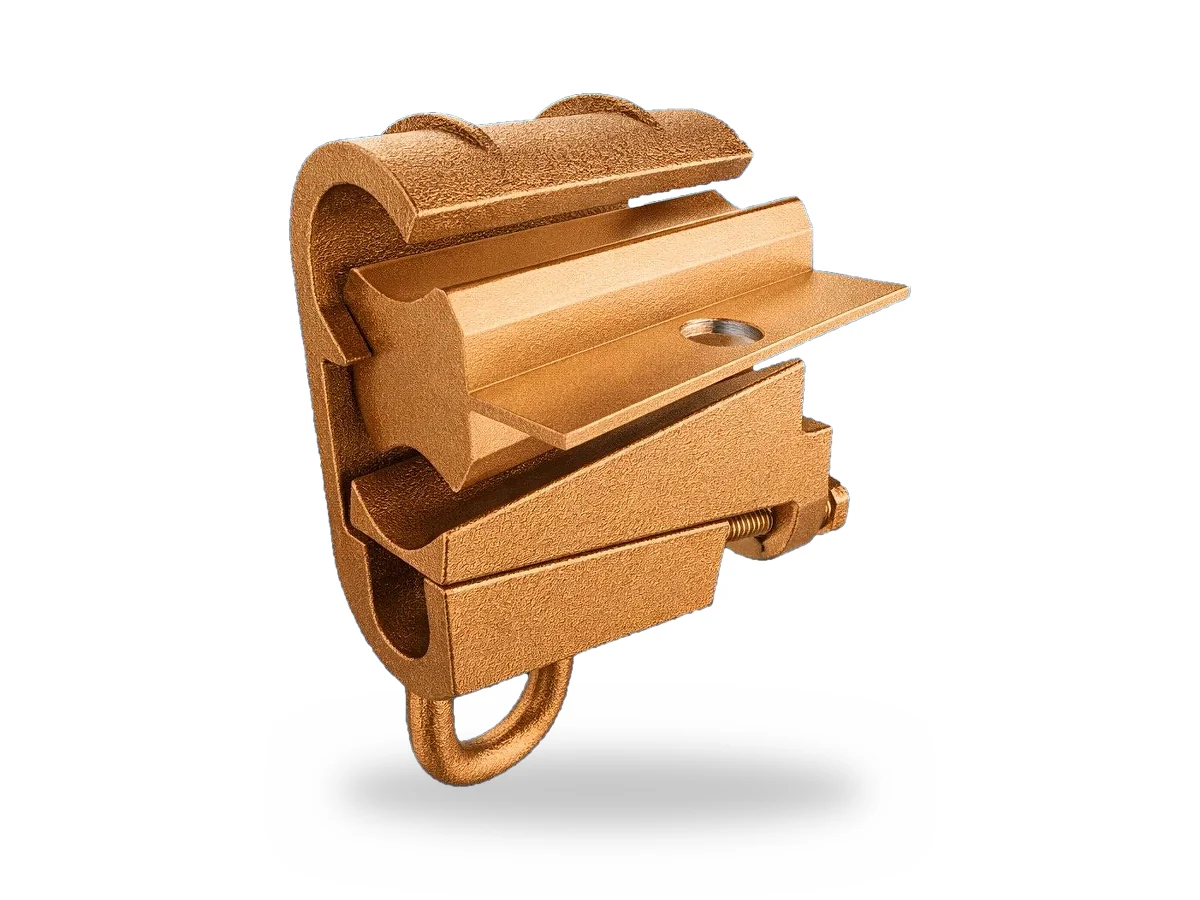
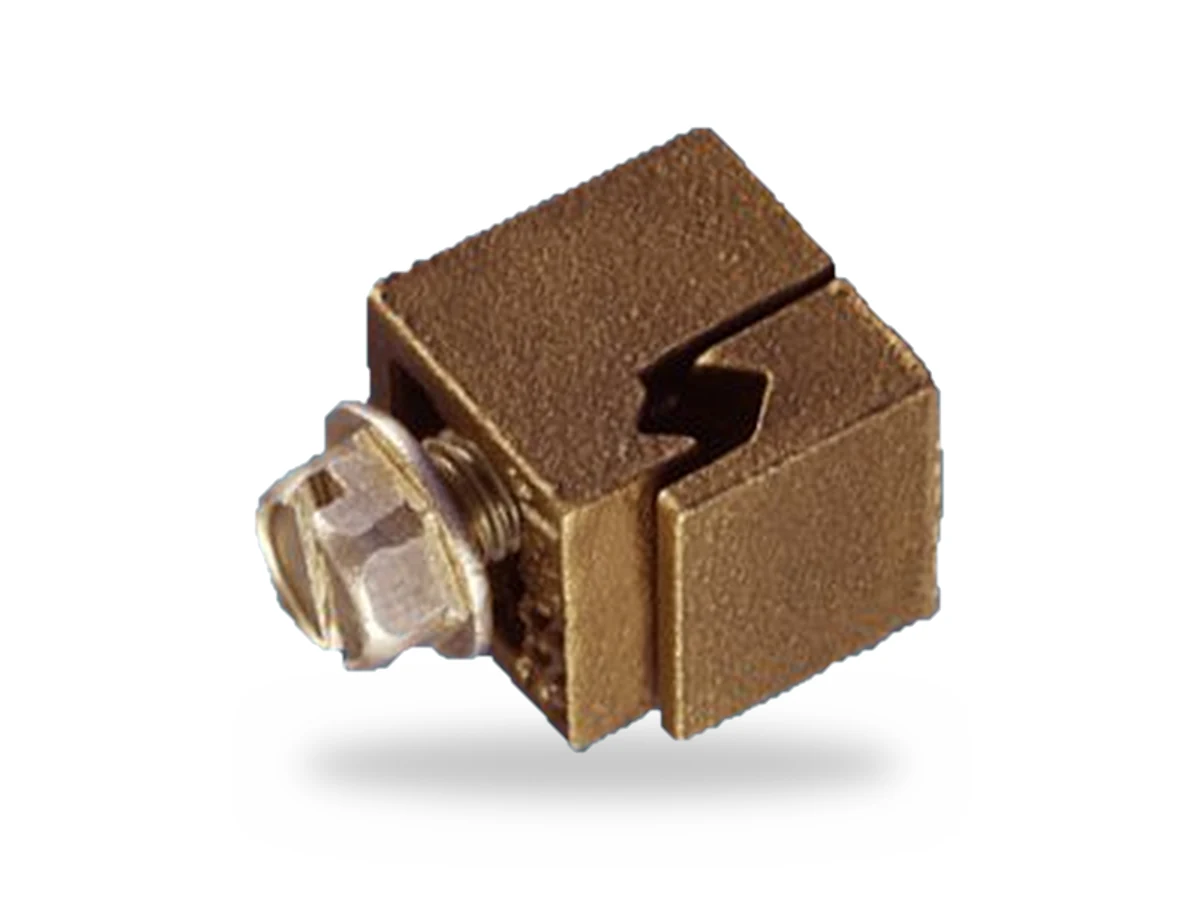

High-pressure die casting suits connector bodies, terminals and lugs, switchgear parts, cable-gland components, enclosures and covers, zinc hardware and automotive parts for switchgear and electrical equipment, cable connectors, power transmission and automotive and EV customers.
Secondary operations
Few die castings leave the machine ready to use. Typical secondary operations at Conex include:
- Trimming — removing runners, overflows and flash in a trim press or by hand.
- Deburring and finishing — vibratory finishing or shot blasting for a uniform surface.
- Machining — tapping threads, reaming precise holes and facing sealing surfaces; machining depths are kept shallow to stay within the dense skin.
- Impregnation — sealing micro-porosity with resin for gas- and liquid-tight parts.
- Plating and coating — nickel, chrome or tin plating for brass; powder coating or anodizing for aluminum, through qualified partners.
- Assembly — inserting bushes, studs or seals where required.
Worked example: a brass connector body
An electrical-equipment maker needs 60,000 small brass connector bodies a year, with a cross-hole, a threaded bore and crisp lettering, tin-plated for conductivity.
- Route: cold-chamber high-pressure die casting in a four-cavity hardened steel die.
- Design review: walls thinned and made uniform, the boss cored out, the lettering moved to a face that needs no machining.
- Production: shot parameters fixed after trials; die temperature monitored; first-off and hourly dimensional checks.
- Secondary: trimmed, vibro-finished, the bore tapped and the cross-hole reamed; tin plating by our plating partner.
- Result: a part made in seconds per cavity, with much less machining than a gravity-cast equivalent — the die paid back within the first year's volume.
Die casting at Conex — what to expect
At Conex, high-pressure die casting is one of ten casting routes we offer, which means our recommendation is not biased toward it. We propose die casting when your volumes, wall thicknesses and detail genuinely favor it — and we tell you when gravity die casting, shell molding or investment casting would give a better part. When die casting is right, you get a die designed and maintained in our tooling department, controlled production, in-house machining and inspection, and documentation with every lot — from one supplier, with one point of contact for the whole component.
Cost and lead time
Die cost is the main investment, and it depends on part size, the number of cavities and the slides needed. Once the die exists, part cost is low: cycle times are short, little machining is needed, and trimming is fast. High-pressure die casting is typically economical from tens of thousands of parts a year. Die design and manufacture usually take 6–10 weeks after drawing approval, followed by samples (T1) and any corrections before production approval.
High-pressure die casting — quick answers
Can die castings be pressure-tight?
Many are, especially with good die design. For gas- or liquid-tight parts we leak-test, and where specified, vacuum-impregnate to seal micro-porosity.
Why can't die castings be heat treated?
Gas trapped during high-speed filling expands when the casting is heated, causing surface blisters. If your part must be heat treated or welded, gravity or low-pressure die casting is the better route.
Which is better for brass parts — gravity or pressure die casting?
For small, thin-walled, high-volume parts, pressure die casting. For larger, thicker or pressure-tight parts that may be heat treated or brazed, gravity die casting.
Request a quotation
Send your drawing, alloy and annual quantity through our quotation form or WhatsApp. We will confirm whether pressure die casting pays back for your volume — or whether gravity die or shell molding gives a better result — and quote die and part prices separately.
Alloys we cast by high-pressure die casting
● dedicated pages first.
Other processes
Industries served
Product families made by high-pressure die casting
Questions buyers ask
What volumes suit high-pressure die casting?+
Usually tens of thousands of parts a year or more, because the hardened steel die is the largest cost.
Can holes and threads be die cast?+
Holes can be cast with core pins; precise holes are reamed and threads are usually tapped after casting.
Which alloys are high-pressure die cast?+
Mainly aluminum alloys (ADC12 / A380) for high-volume, thin-walled parts, plus selected brasses such as EcoBrass C87850 and silicon bronze C87600.
Is pressure die casting suitable for small orders?+
Usually not — die costs are high, so it is best for high annual volumes.
Send your drawing, get a quotation.
DWG, PDF, STEP or a sample photo — with quantity and destination port.