
23 alloys
Centrifugal Casting
Spinning molds push metal outward for a dense, sound structure with very low porosity — the standard route for bushes, sleeves and rings.
Centrifugal Casting — complete guide
Centrifugal casting is the standard way to make dense, sound, round parts — bushes, sleeves, bearings, rings and gear rims — in bronze and other copper alloys. Molten metal is poured into a mold spinning at high speed; centrifugal force throws it against the mold wall, where it solidifies from the outside in. Lighter impurities, gas and oxides are forced toward the bore, where they are machined away, leaving a clean, fine-grained wall with very low porosity. At Conex Casting Foundry, centrifugal casting is our route for bronze bushes, bearing blanks, worm-wheel rims and sleeves that must run for years under load.
This guide explains how centrifugal casting works, horizontal and vertical machines, which alloys and parts suit it, the quality it gives, how to specify centrifugally cast parts, and how it compares with continuous and sand casting.
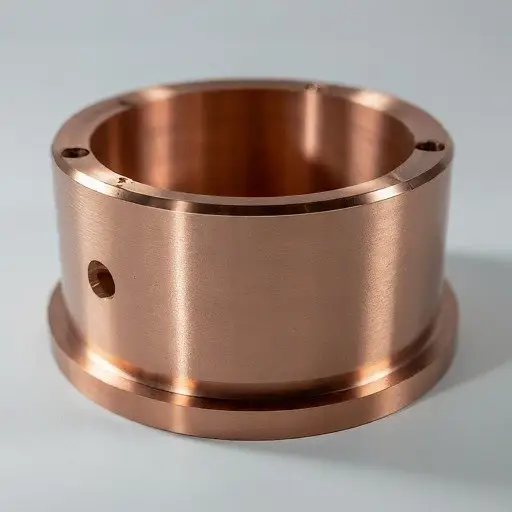
What is centrifugal casting?
In centrifugal casting, a cylindrical metal mold (die) is rotated about its axis while molten metal is poured into it. The rotation generates a force many times that of gravity — commonly in the range of about 60 to 100 g at the mold wall — which presses the metal firmly against the mold. The casting solidifies from the outside surface inward, under pressure, and the inside surface forms naturally as a true cylinder without any core.
Because denser metal is pushed outward and less-dense material — slag, oxides, gas — is pushed inward, the structure is graded: the outer wall, where the part will carry load, is the cleanest and densest. The inner surface, which carries most of the impurities, is removed when the bore is machined. That is why centrifugally cast bearings and bushes outlast sand-cast ones in demanding service.
In the USA, copper-alloy centrifugal castings are specified to ASTM B271; EN 1982 designates them with the suffix -GZ (for example CuSn12-C-GZ for centrifugally cast tin bronze).
Horizontal and vertical centrifugal casting
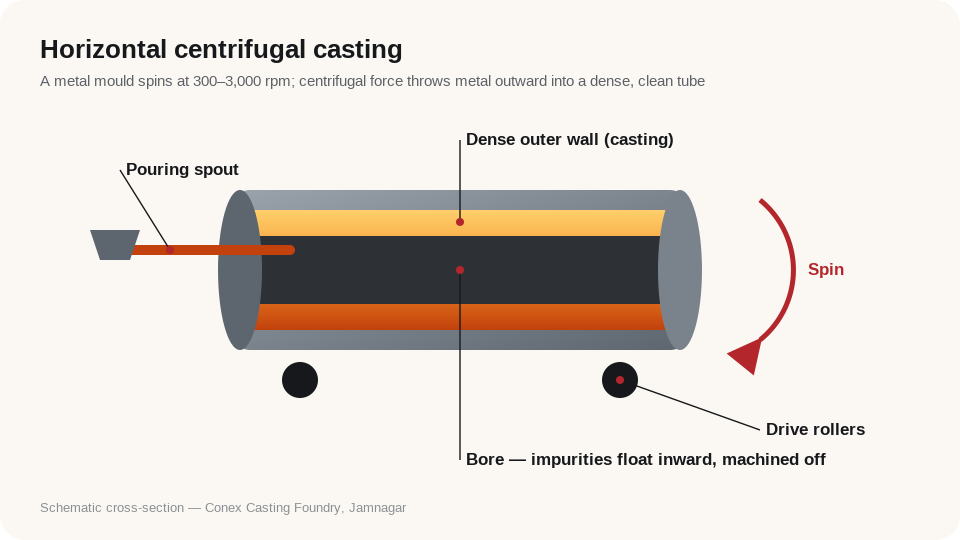
Horizontal machines
The mold spins about a horizontal axis. Used for long parts — tubes, sleeves, long bushes and bearing blanks — where the length is greater than the diameter. Wall thickness is uniform along the length.
Vertical machines
The mold spins about a vertical axis. Used for short parts with a large diameter — rings, gear and worm-wheel rims, flanged bushes and thrust washers. Shapes can include flanges and steps on the outside.
A third variant, semi-centrifugal or centrifuged casting, spins a mold containing several cavities around a central sprue — used for symmetrical parts such as wheels and gear blanks with solid centers.
How centrifugal casting works — step by step
- Mold preparation. The steel or cast-iron mold is cleaned, pre-heated and coated with a refractory wash that insulates the metal and helps the casting release.
- Spinning up. The mold is brought to the calculated speed for the diameter and alloy — too slow and the metal "rains" and laminates; too fast and it can crack.
- Pouring. A measured weight of metal, melted and checked to your grade, is poured through a spout at a controlled rate. The weight decides the wall thickness.
- Solidification. The metal solidifies from the mold wall inward while spinning. Cooling may be assisted with water sprayed on the outside of the mold.
- Extraction. When solid, the mold is stopped and the casting is extracted.
- Machining. The outside diameter, bore and ends are machined to size on CNC lathes; oil grooves, flanges and holes are added as specified.
- Inspection. Chemical analysis, hardness, dimensional checks and — on request — ultrasonic or dye-penetrant testing.
Choosing the spin speed
The single most important setting in centrifugal casting is the rotation speed. It is chosen so that the metal at the mold wall experiences a force many times gravity — commonly expressed as a "G factor" of about 60 to 100 for horizontal casting. Because centrifugal force depends on both speed and radius, a small-diameter mold must spin much faster than a large one to reach the same G factor: a 100 mm bush might be cast at well over a thousand revolutions per minute, while a large sleeve needs only a few hundred.
Too little speed and the metal does not stay pressed against the wall: it slips and "rains" inside the mold, giving laminations and poor bonding between layers. Too much speed and the solidifying shell is stretched hard enough to tear, giving longitudinal cracks — especially in alloys with a long freezing range such as leaded tin bronzes. Our operators set the speed from the diameter, wall thickness and alloy, and keep it constant through pouring and early solidification.
The pouring rate matters too. Pouring too fast causes metal to splash and pile up; pouring too slowly lets the first metal freeze before the wall is built, giving cold laps. The right rate builds the wall smoothly from end to end.
Alloys we cast centrifugally
| Alloy family | Typical grades | Typical parts |
|---|---|---|
| Tin bronze / phosphor bronze | C90500, C90700, C91700, PB1, PB2, CC480K, CC483K | Worm-wheel rims, gear blanks, heavy-duty bushes |
| Leaded tin bronze | C93200 (SAE 660), C93700, C93800, LB2, LB4 | Plain bearings and bushes |
| Gunmetal | C83600, LG2, LG4 | General bushes, sleeves, pump wear rings |
| Aluminum bronze & nickel aluminum bronze | C95400, C95500, C95800, AB1, AB2 | High-load bushes, wear rings, marine shaft sleeves |
| High-tensile brass | C86300, HTB1 | Heavy-duty slow-speed bushes, nuts |
| Copper-nickel | C96200, C96400 | Seawater pipe and sleeves |
For each grade's composition and properties, see the alloy library.
Sizes and shapes
| Characteristic | Typical centrifugal range |
|---|---|
| Outside diameter | from about 40 mm to several hundred millimeters |
| Length (horizontal) | up to the mold length — long sleeves and tubes |
| Wall thickness | from about 8 mm; thick walls are no problem |
| Shapes | Plain tubes and sleeves; flanged, stepped or profiled outsides with shaped molds |
| Machining allowance | Typically 2–4 mm on the OD and 3–6 mm on the bore |
Why centrifugal castings perform better
- Dense, sound wall — solidification under centrifugal pressure greatly reduces the shrinkage and gas porosity that can occur in sand-cast bushes.
- Fine grain — rapid cooling against the metal mold refines the structure, raising strength and wear resistance.
- Clean bearing surface — impurities are concentrated at the bore and machined off, so the running surface is the cleanest metal in the casting.
- Uniform properties around the circumference — important for gears and bearings.
- High yield — no cores, gates or risers are needed.
Specifying a centrifugally cast part
- Give finished dimensions and tolerances — we add the machining allowance and choose the mold.
- State the alloy and standard (for example ASTM B271 C93200, or EN 1982 CuSn12-C-GZ).
- Describe the service — load, speed, lubrication and mating material — so we can confirm the alloy and hardness.
- Specify testing — chemical, hardness, tensile test, ultrasonic or dye-penetrant — and the documents you need.
- Tell us about features — flanges, oil grooves, holes, keyways — which we machine after casting.
Centrifugal, continuous or sand casting?
| Centrifugal | Continuous | Sand | |
|---|---|---|---|
| Best for | Medium and large diameters, heavy-duty bushes, rims | Bar stock, small and medium bushes in volume | Complex shapes, one-offs |
| Soundness | Excellent | Excellent | Good with correct method |
| Grain structure | Fine, graded | Fine, uniform | Coarser |
| Tooling | Metal molds by diameter | Graphite dies by size | Pattern per part |
| Shape flexibility | Round parts only | Constant cross-section | Almost any |
Small bushes in high volumes are often machined from continuously cast bar; larger, heavy-duty bushes, rims and sleeves are best cast centrifugally to size. We recommend whichever gives the best combination of quality and cost for your dimensions.
Machining bushes and bearings after casting
A centrifugal casting becomes a bush or bearing on our CNC lathes, and the machining is as important as the casting. Typical operations include:
- Outside diameter turned to the press-fit or slide-fit tolerance specified for the housing — commonly an interference fit so the bush cannot rotate.
- Bore finished to the running clearance for the shaft, allowing for the bore closing slightly when the bush is pressed in.
- Oil grooves — straight, spiral, figure-eight or circular — cut to distribute lubricant across the bearing surface.
- Lubrication holes, flanges, chamfers and lead-in angles for easy assembly.
- Solid-lubricant plugs — graphite inserts set into drilled pockets for self-lubricating bushes used where oiling is difficult.
- Split bushes and half-shells, cut and finished as pairs.
Machining from the outside inward removes the inner layer of the casting, where any impurities collected — so the finished running surface is the cleanest metal in the part.
Worked example: a phosphor-bronze worm-wheel rim
A gearbox manufacturer needs worm-wheel rims of 320 mm outside diameter in phosphor bronze, to run against a case-hardened steel worm under heavy, continuous load.
- Alloy: C90700 / PB1 type phosphor bronze — the classic worm-gear bronze, combining strength, wear resistance and good running against steel.
- Route: vertical centrifugal casting into a steel mold, giving a dense, fine-grained ring with very low porosity in the tooth zone.
- Control: speed set for the diameter; pouring temperature and phosphorus content checked for every heat.
- Machining: rim turned and bored, bolt holes drilled for mounting on the steel hub; teeth are hobbed by the customer.
- Testing: chemical analysis, hardness, and ultrasonic testing of the rim on sample parts; certificates with every lot.
The dense centrifugal structure in the tooth zone is what gives a worm wheel its long life — sand-cast rims of the same alloy are more likely to show porosity exactly where the teeth are cut.
Ordering checklist
When you request centrifugally cast bushes or rings, include: finished outside diameter, bore and length with tolerances; press-fit and running-clearance requirements; alloy and standard; oil grooves, flanges and holes; the quantity per batch and per year; and the tests and certificates you need. If you are replacing a worn part, a photo of the worn bush and a description of the operating conditions help us confirm the grade.
Quality control
Under our ISO 9001:2015 system, every centrifugal casting batch is controlled for mold temperature and coating, rotation speed, pouring temperature and weight, and melt chemistry by spectrometer. Finished parts are checked for dimensions and hardness; tensile testing from test bars or coupons, ultrasonic testing and dye-penetrant testing are available. Each consignment ships with a material test certificate and inspection report — see quality and testing.
| Defect | Cause | Prevention |
|---|---|---|
| Laminations / "raining" | Speed too low | Correct speed calculation for diameter and alloy |
| Longitudinal cracks | Speed too high, hot tearing | Speed control, mold coating |
| Segregation (lead, tin) | Slow solidification | Mold temperature and cooling control |
| Inclusions at OD | Dirty metal, coating breakdown | Melt cleaning, coating practice |
Typical centrifugally cast parts
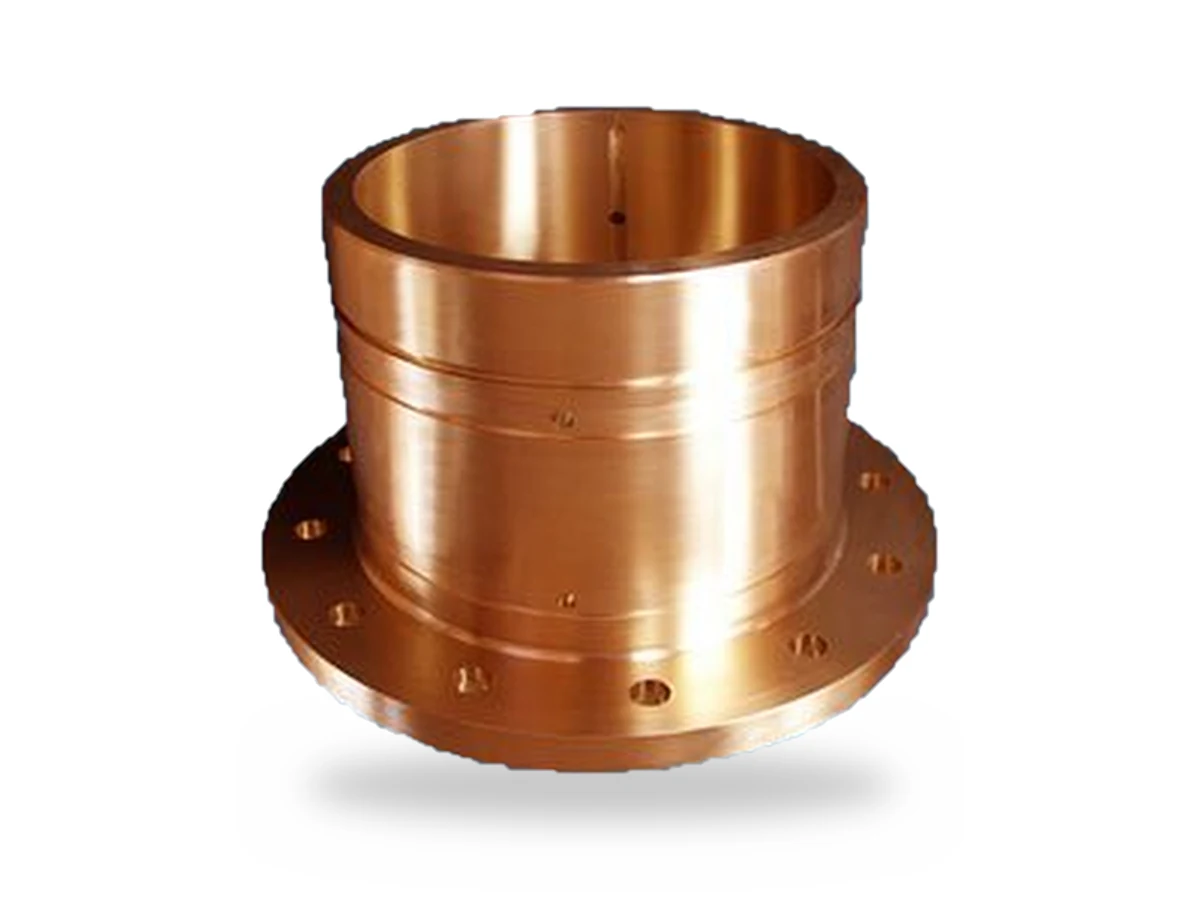
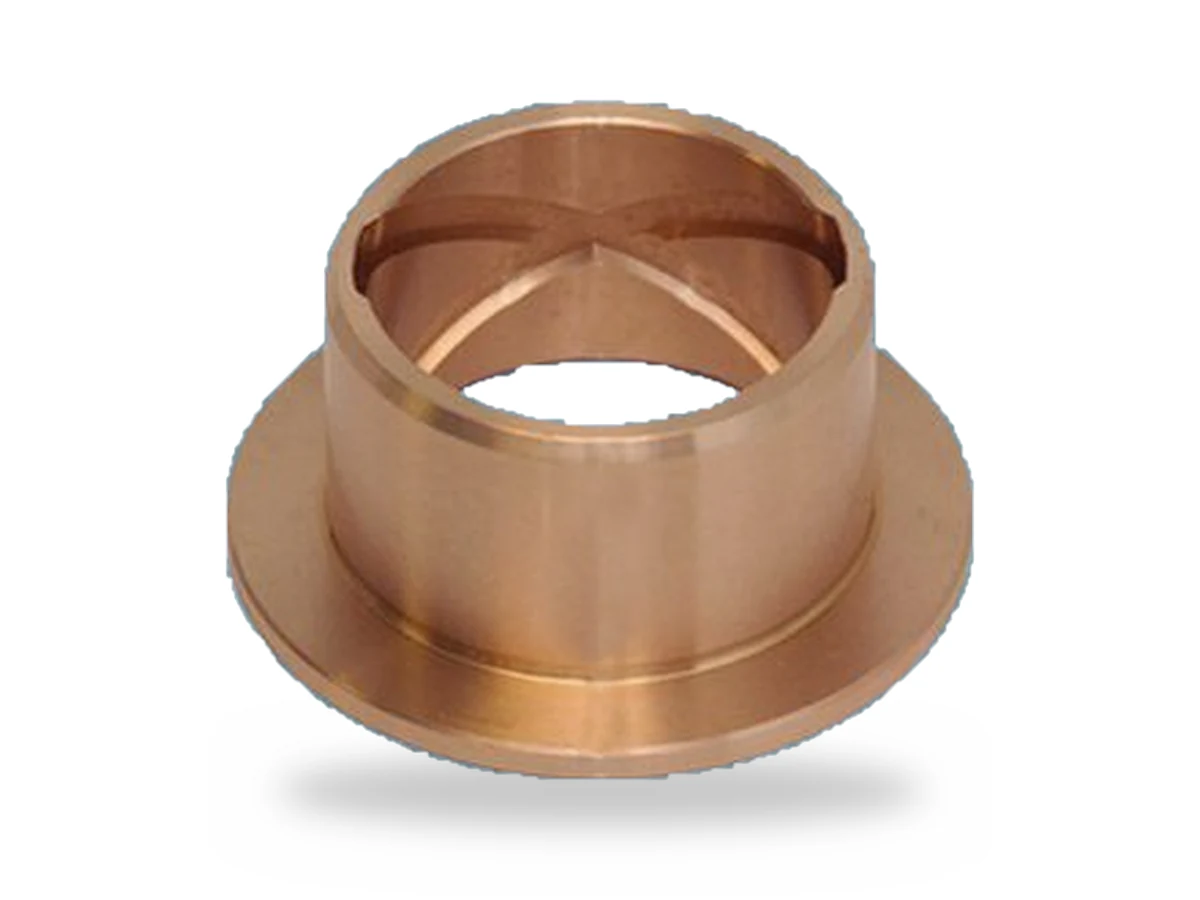
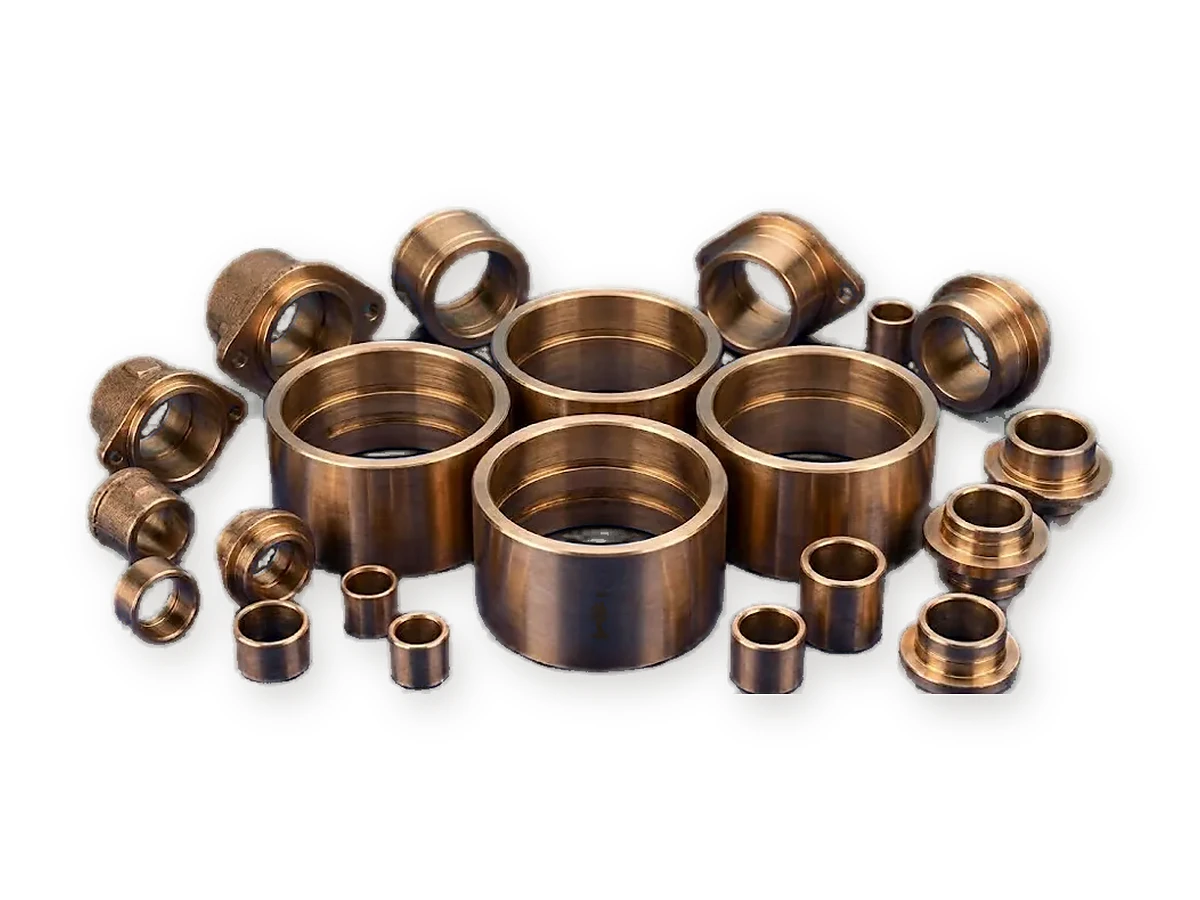
Typical parts include plain and flanged bushes, bearing blanks and shells, worm-wheel and gear rims, pump wear rings, marine shaft sleeves, thrust washers and tube-plate blanks — for sugar, cement and steel plants, mining, earthmoving, railways, marine and material handling.
Where centrifugal casting came from
The idea of spinning a mold to cast metal was patented in the early nineteenth century, and the process became industrially important in the early twentieth century for cast-iron pipe. Copper-alloy foundries soon adopted it for bearings and bushes, because nothing else produced such sound, wear-resistant bronze. Today centrifugal casting is used worldwide for bronze bearings, gear rims, pump wear rings and marine sleeves, and its advantages are recognized in dedicated standards such as ASTM B271 and the -GZ designations of EN 1982.
Choosing the right bronze for a bush
The alloy matters as much as the process. As a guide:
- Leaded tin bronze (C93200 / SAE 660, LB2) — the general-purpose bearing bronze: good conformability and anti-seizure behavior, tolerant of imperfect lubrication; moderate loads and speeds.
- High-lead bronze (C93700, C93800) — for poor lubrication, dirty conditions and misalignment, at lower loads.
- Tin and phosphor bronze (C90500, C90700, PB1, PB2) — higher strength and hardness for heavier loads, gears and worm wheels; needs good lubrication and a hard shaft.
- Aluminum bronze (C95400, C95500) — very high load capacity and shock resistance at low speeds, excellent in corrosive or marine service; requires a hardened shaft.
- High-tensile brass (C86300) — very high strength for slow-moving, heavily loaded bushes and screw-down nuts.
Tell us the load, speed, lubrication and shaft material and we will recommend the grade — our alloy comparison tool also shows the grades side by side.
Centrifugal casting at Conex
Our centrifugal casting cell produces bronze bushes, sleeves, rings and rims in the grades listed above, with molds for a wide range of diameters held in stock. Castings move straight to our CNC turning section, so you receive finished bushes rather than rough blanks — with chemistry, hardness and dimensional reports for every lot.
Cost and lead time
Centrifugal casting needs no part-specific pattern for plain shapes — only a mold of the right diameter — so tooling cost is low and the process is economical even for small quantities. Cost is driven by alloy, weight and machining. Standard sizes can often be cast within 1–2 weeks; shaped molds for flanged or profiled parts take longer.
Centrifugal casting — quick answers
Why are centrifugal bushes better than sand-cast bushes?
They are denser, with finer grain and no shrinkage porosity, and the bearing surface is machined from the cleanest metal. That means longer wear life under load.
Can you supply semi-finished blanks?
Yes — rough-machined or as-cast blanks for you to finish, or fully machined parts ready to fit.
Which alloy should I choose for a worm wheel?
Phosphor and tin bronzes such as C90700 / PB1 and C90800 / PB2 are the usual choice for worm-wheel rims running against hardened steel worms; we confirm the grade from your load and speed.
How long a sleeve can you cast?
On horizontal machines the length is limited by the mold; long sleeves and tubes are cast in one piece and cut to length. Tell us the finished length and we will confirm the best route.
Do you cast bimetal or steel-backed bearings?
Our focus is solid bronze bushes and bearings cast and machined to size. For steel-backed designs, we can advise on a solid-bronze alternative that suits your housing.
Request a quotation
Send your drawing or finished dimensions, alloy, quantity and testing requirements through our quotation form or WhatsApp. We will recommend centrifugal or continuous casting for your size and quote the finished part.
Alloys we cast by centrifugal casting
● dedicated pages first.
Other processes
Industries served
Product families made by centrifugal casting
Questions buyers ask
What is the difference between horizontal and vertical centrifugal casting?+
Horizontal machines make long tubes and sleeves; vertical machines make short, large-diameter rings, rims and flanged bushes.
Why are bushes centrifugally cast?+
The spinning mold packs metal densely and pushes impurities to the bore, which is machined away — giving a sound, wear-resistant part.
Which alloys are centrifugally cast?+
Tin, phosphor, leaded tin and aluminum bronzes for bushes, sleeves, rings and bearing blanks.
Send your drawing, get a quotation.
DWG, PDF, STEP or a sample photo — with quantity and destination port.